As a power cable supplier with over a decade in the industry, I get this question at least a dozen times a week: “Can I use a power cable with a different conductor material?” It’s not an unreasonable ask, either. Whether you’re a facility manager looking to trim project costs, an electrical engineer troubleshooting a tricky installation, or a small business owner trying to source materials faster, deviating from the standard copper conductor feels like a simple fix. But let me tell you straight: this isn’t a question you can answer with a quick Google search or a offhand decision. There’s a lot of science, regulatory fine print, and real-world performance at stake here—and as someone who’s spent years walking clients through these choices, I want to break this down honestly, no sales spin, just facts. Power Cable

First, let’s start with what every power cable’s conductor does, because that’s the core of the question. The conductor is the part that carries electrical current from your panel to your equipment. Its job is twofold: first, to minimize energy loss as current flows, and second, to handle the temperature and mechanical demands of the environment it’s installed in. The most common conductor material in the U.S. and global markets is annealed copper—soft, ductile, and with the second-highest electrical conductivity of any non-precious metal, right behind silver. But copper isn’t cheap, and for applications where cost is king, some specs mention aluminum, even steel, or alloys that mix the two. So let’s compare the main players, because that’s where the tradeoffs start.
Aluminum conductors are the biggest alternative out there, and I’ve seen them used in everything from overhead power lines to low-voltage commercial wiring. Conductivity-wise, pure aluminum is about 61% of copper’s conductivity—meaning to carry the same amount of current as a 10 AWG copper cable, you need a 7 AWG aluminum cable. That’s a bigger physical cable, which means more material, more space in conduit, and sometimes higher installation costs. I’ve had a client try to cut corners by swapping copper for aluminum in a 10,000-foot run of underground feeders, only to find they had to re-route because the thicker aluminum cable wouldn’t fit through their existing conduit. That’s a common hidden cost people miss. Then there’s thermal performance: aluminum has a lower melting point (1,220°F vs. copper’s 1,984°F) and expands more when heated. Over time, that expansion and contraction can loosen connections at terminals, which creates resistance, generates heat, and even leads to fires if left unaddressed. We’ve had to replace hundreds of aluminum wiring splices in residential homes built in the 70s and 80s because of exactly that—loose connections from thermal cycling. It’s not that aluminum is bad, but it’s not a drop-in replacement.
Steel conductors, on the other hand, are almost never used for regular power distribution. They’re mostly for overhead transmission lines where weight isn’t as big a concern, or as a core in aluminum cables (known as ACSS, or aluminum conductor steel-supported, which adds strength for long spans). Steel’s conductivity is only about 10-15% of copper’s, so using a steel conductor for general wiring is a non-starter—you’d lose 10x more energy as heat, and the cable would have to be enormous to carry even a small current. I’ve only ever heard of steel being used for specialty applications, like grounding electrodes, and even then it’s coated with copper to boost conductivity.
Then there are copper alloys, like copper-magnesium or copper-clad aluminum (CCA), which try to split the difference between cost and performance. CCA is exactly what it sounds like: an aluminum core with a thin copper cladding on the outside. The idea is that the copper on the surface carries most of the current (since current flows along the outer edge of a conductor, a phenomenon called the skin effect), while the cheaper aluminum core cuts material costs. But here’s the catch: that copper cladding is only a few thousandths of an inch thick. For low-voltage applications like extension cords, CCA might work for small loads, but for medium or heavy power—like a 200-amp feeder for a shop or industrial equipment—that thin copper isn’t enough. We tested a CCA 4/0 cable for a warehouse client a couple years back; within 6 months, the cable was running 20°F hotter than a pure copper equivalent, and the insulation was starting to degrade faster. The National Electrical Code (NEC) actually has restrictions on CCA for many applications, too—you can’t use it for branch circuits over 15 amps, or for underground direct burial, because of the higher resistance and risk of overheating.
Now, let’s talk about the science of conductivity, because that’s the hard number that can’t be argued with. Electrical conductivity is measured in siemens per meter (S/m), and annealed copper comes in at 59.6 x 10^6 S/m, while pure aluminum is 37.7 x 10^6 S/m. That means for the same current-carrying capacity (ampacity), an aluminum cable has to be two AWG sizes larger than copper. Let’s do a real-world example: a 12 AWG copper cable is rated for 20 amps at 60°C. A 12 AWG aluminum cable only carries 15 amps at 60°C—so if you swap 12 AWG copper for aluminum to save money, you’re under-sizing your cable, which is a code violation and a safety hazard. We had a small restaurant client do that a few years ago; they swapped their 12 AWG copper extension cords for aluminum ones to save $5 each, and the cords overheated while running a commercial oven, melting the insulation and nearly starting a fire. That’s not a hypothetical—we responded to that service call, and the cost of repairing the wiring and updating their system was way more than the $100 they saved on cords.
But wait, what about high-voltage applications? A lot of people ask about overhead transmission lines, where aluminum conductors are standard. The reason that works is because those lines are long—miles of cable, so the weight of copper would be prohibitive. Also, high-voltage systems have lower current, so the higher resistance of aluminum is less of a problem. But that’s a very specific use case, not the residential or commercial wiring most of our customers deal with. If you’re running a 1,000-foot overhead line for a farm, aluminum works great. If you’re running a 50-foot branch circuit in an office, aluminum is going to cost you more in installation and long-term energy losses.
Another big factor is mechanical performance. Copper is ductile, which means it bends easily without breaking—perfect for running through walls, around corners, or pulling through conduit. Aluminum is stiffer and more brittle, so it’s easier to crack or break during installation. I’ve had a contractor tell me they tried pulling a 500-foot run of aluminum conductor through a commercial conduit, and it snapped in the middle—they had to dig up part of the wall to fix it, which cost them way more than the copper cable would have. That’s a hidden cost that most people don’t account for when they’re just looking at the material price per foot.
So, is there any scenario where swapping conductor material is a good idea? Let’s be clear: it’s not never, but it’s almost never a drop-in replacement. If you’re working on a specialized project where aluminum is approved, and you adjust the cable size to compensate for lower conductivity, that’s fine. For example, a 2 AWG aluminum cable has the same ampacity as a 3/0 copper cable, so if you’re set on aluminum, you just need to upsize. But you have to check local codes first—some jurisdictions have strict rules about conductor materials for certain applications, especially for fire alarm systems, medical equipment, or other critical loads. If you cut corners there, you’re not just violating code, you’re putting people at risk.
I also want to mention a common misconception: that all copper is the same. There are different grades of copper, like bare bright copper (the highest purity, used for electrical conductors) and recycled copper, which can have impurities that lower conductivity. As a supplier, we only use annealed bare bright copper for our standard cables, because recycled copper can have inconsistent conductivity, which creates variable performance and safety risks. If you’re using a cheap “copper” cable from a non-specialty supplier, it might actually be low-purity copper, or even copper-clad steel, which is not suitable for most applications. That’s why buying from a reputable supplier matters—we test every batch of conductor material to make sure it meets NEC standards, so you don’t have to guess.
Long-term cost is another angle people miss. Sure, aluminum cables might be cheaper to buy upfront, but over the life of the cable, the energy losses add up. A 1,000-foot run of 4/0 copper cable carries 200 amps at 120V, and the energy loss is about 1.5 kW per hour. That’s $13 a month in energy costs, or $156 a year. An aluminum cable of the same ampacity would lose about 2.5 kW per hour, which is $21 a month, or $252 a year. Over 20 years, that’s a difference of $1,920 in energy costs—more than the upfront difference between copper and aluminum cables. So even if the cable is cheaper, you’re paying more in the long run.
Now, let’s talk about what happens if you do swap a conductor material without doing it right. We’ve seen everything from minor overheating to complete cable failure, even fires. The NEC requires that conductors are rated for the application, and mismatching materials can lead to improper termination, which as I mentioned earlier, causes loose connections and heat buildup. We also work with inspectors all the time, and they flag non-approved conductor swaps as code violations, which means you’ll have to rework the installation, adding time and cost.
So, what should you do if you’re considering a different conductor material? First, talk to a qualified electrical engineer or your local code inspector before making any changes. They can help you figure out if the material is approved for your application, and what size cable you need to compensate for conductivity differences. Second, work with a reputable power cable supplier who can test their materials and provide documentation that they meet industry standards. At our company, we don’t just sell cables—we provide technical support to help our customers make the right choice, whether that’s a standard copper cable or a specialty aluminum cable for a specific project.
If you’re still on the fence, let me share a real example from a recent project. A construction client came to us wanting to use aluminum conductors for a 10,000-square-foot retail space to cut costs. We walked them through the ampacity requirements, conduit space limitations, and code restrictions, and they initially insisted on aluminum. But after we ran the numbers, the aluminum system would have cost them $2,000 more in installation and energy costs over 5 years, and would have required re-routing their conduit to fit the thicker cable. They ended up going with our standard copper cables, and later told us they saved more than we estimated because they avoided the cost of rework when their original aluminum plan didn’t pass the electrical inspection.
At the end of the day, there’s no one-size-fits-all answer to “can I use a power cable with a different conductor material?” It depends on your application, local codes, installation conditions, and long-term cost goals. But as someone who’s been in this industry for years, I can tell you that deviating from standard copper conductors without a clear reason and proper planning almost always leads to more problems than it solves.
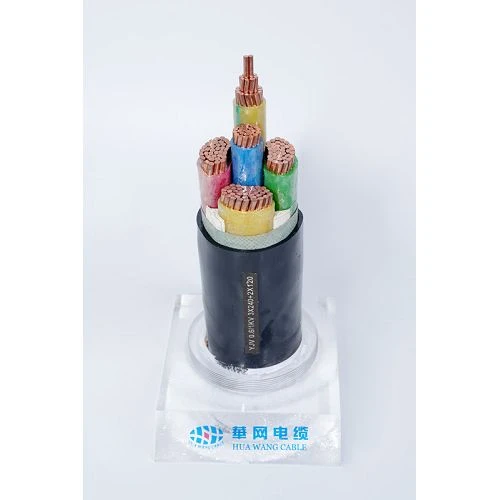
If you’re working on a project and want to break down your options, or need help specifying the right conductor material, don’t hesitate to reach out to our team for a consultation. We’ll walk you through the science, the code requirements, and the real-world costs so you can make an informed choice that’s safe, compliant, and cost-effective for your project.
Control Cable References
- National Electrical Code (NEC) 2023, Article 310, Conductors for General Wiring
- ASTM B3-19, Standard Specification for Copper Wire, Bars, and Rods for Electrical Purposes
- Underwriters Laboratories (UL) Standard 83, Power Cords and Equipment Connecting Cords
- Copper Development Association, “Conductor Materials: Properties and Applications”
- Aluminum Association, “Aluminum Conductors for Power Distribution: Design and Installation Guidelines”
Anhui Huawang Cable Co., Ltd.
As one of the most professional power cable manufacturers and suppliers in China, we also support customized service. If you’re going to buy discount power cable, welcome to get pricelist from our factory. Quality products and reasonable price are available.
Address: No. 32, East Street, Batian Street, Datong Town, Tianchang City, Anhui Province
E-mail: Linda@huawangcable.com
WebSite: https://www.huawang-cable.com/
