If you’ve ever worked in industrial piping, oil and gas, chemical processing, or even water treatment, you know that Ks flanges aren’t just generic round plates with holes. As a supplier who’s spent the last 12 years sourcing, inspecting, and delivering these components to clients across North America, I’ve watched firsthand how pricing shifts constantly—sometimes by 15% in a single quarter. It’s not arbitrary, either. Every variable that goes into making a Ks flange, plus the market forces around it, chips away at or adds to the final cost. Today, I’m breaking down those factors straight from the shop floor, no industry jargon twisted to confuse, and what that means for anyone sourcing these parts. Ks Flange
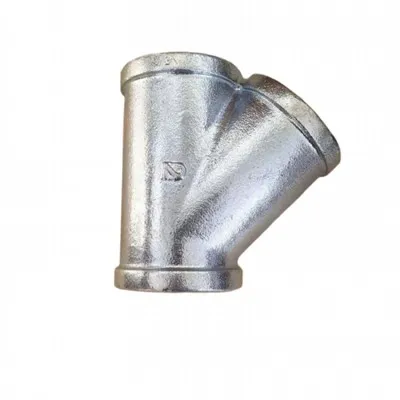
First, let’s start with what a Ks flange actually is, because a lot of new engineers or procurement folks don’t realize there’s a difference between it and standard flanges. Ks flanges (sometimes spelled K-type or keyway flanges) are specifically designed with a keyway cut into their face to lock mating shafts or pipes in place, preventing rotation under high torque. They’re most common in heavy-duty applications—think pump assemblies, conveyor systems, and offshore pipeline joints where movement can cause catastrophic failures. That specialized design isn’t cheap to produce, so every step of the manufacturing process factors into the price.
The biggest driver, hands down, is raw material. Ks flanges are almost always made from carbon steel, stainless steel, or alloy steel, each with drastically different costs. Carbon steel, the most widely used option, relies heavily on scrap metal and iron ore prices. Back in 2021, when global steel mills were short on scrap due to pandemic-related shipping delays, the price of carbon steel rose 32% in six months—and Ks flange prices followed suit immediately. Stainless steel adds another layer: it contains nickel and chromium, whose prices swing based on mining output and geopolitics. In 2022, when Russia (a top nickel exporter) cut off supplies to the EU, stainless steel Ks flange prices jumped 28% in two weeks. Even smaller variations, like choosing between hot-rolled or cold-finished steel, affect cost: cold-finished has tighter tolerances and a smoother finish, so it’s 10-12% more expensive than hot-rolled, which is why we often advise clients to only pay the premium if their application demands it.
Next, manufacturing processes. Ks flanges require precision machining—you can’t just cast a generic flange and cut a keyway on the side; the keyway has to align perfectly with the bolt holes, or it won’t lock the shaft correctly. The complexity of that machining changes with size and thickness. A 4-inch Ks flange is a standard part that most shops can produce in 24 hours, so its price is steady. A 48-inch Ks flange, though, needs heavy-duty milling equipment, custom tooling, and multiple quality checks to ensure the keyway is straight within 0.005 inches. We charge 45% more for that 48-inch part than the 4-inch, not just for material, but for the labor and equipment overhead. Even the type of keyway matters: standard parallel keyways are cheap, but splined keyways (used for higher torque applications) require extra milling steps, adding 15% to the total cost. Quality control here isn’t optional, either. Every Ks flange we ship goes through a magnetic particle test to check for surface defects, which adds a small cost but prevents clients from receiving defective parts that would fail in the field.
Then there’s order quantity and lead time. This is where a lot of first-time buyers get caught off guard. We price Ks flanges on a bulk discount scale, because setting up a machining run has fixed costs—programming the CNC machine, setting up the tooling, and running the initial test parts. If you order 10 pieces, you’re paying for that setup cost spread over 10, so each part is around $120 for a 6-inch carbon steel flange. If you order 1,000, the setup cost stays the same, so each part drops to $75. Conversely, if you need a rush order—say, you have a pump failure and need 20 flanges delivered in 3 days instead of our standard 10-day lead time—we charge a 25% premium to prioritize your run, which includes overtime for our machinists and expedited shipping. We’ve had clients pay that premium when an offshore rig was down, and it’s a cost they’re willing to absorb because downtime on a rig can cost $100,000 a day.
Geography and shipping costs are another huge factor. Ks flanges are heavy—steel flanges add 20 to 50 pounds per inch of diameter—so shipping them cross-country isn’t cheap. A client in Texas ordering 50 8-inch flanges pays $150 in ground shipping. A client in Alaska ordering the same parts pays $480, because shipping to remote areas requires oversize load permits and additional handling. Even international shipping adds layers: customs duties, tariffs, and shipping from overseas mills. We used to source some Ks flanges from a mill in China, but when Section 232 steel tariffs were put in place, those parts ended up being 20% more expensive than domestic-made ones, so we shifted all our sourcing to North American mills in 2019. That move stabilized prices for our clients, even when international shipping costs spiked during the pandemic.
Wait, also, special coatings and certifications. A lot of Ks flange applications are in corrosive environments—offshore saltwater, chemical plants, or food and beverage processing. So if a client needs a flange coated with zinc (for rust resistance) or passivated stainless steel (to meet food safety standards), that’s an extra 8-18% on the price. Certifications are another add-on: some industries, like nuclear power or aerospace, require traceability for every part, meaning we have to track every raw material batch and machining step and provide a certificate of conformance (CoC) with each shipment. That CoC adds 5-10% to the cost, because our quality team has to compile all the paperwork, but it’s non-negotiable for regulated industries.
Now, let’s talk about market forces that are out of anyone’s control, but still affect pricing. Like most steel products, Ks flange prices are tied to global demand. During 2020, when construction and manufacturing came to a halt, demand for flanges dropped, and we had to cut our prices by 10% to move inventory. In 2023, when the EV and renewable energy sectors boomed—wind turbines use tons of heavy-duty Ks flanges for their gearboxes—demand spiked, and prices rose 12% as mills prioritized those large orders. Geopolitical tensions also play a part: when the Suez Canal was blocked in 2021, steel shipments from Europe and Asia were delayed, causing a 7% price hike for all metal components, including Ks flanges. Even labor shortages matter: if our machinists are in high demand, we have to raise wages to keep them, which gets passed on to our clients as a 3-5% price increase.
I get it—procurement teams are always looking for the lowest price, but I also want clients to understand that not all Ks flanges are the same. A $50 carbon steel flange from an unvetted overseas supplier might seem like a deal, but if it has a misaligned keyway or a crack in the material, it can cause a pump failure that costs thousands in downtime. That’s why we focus on transparency: we break down every cost for clients, so they know exactly what they’re paying for, and we work with them to adjust their orders to fit their budget without sacrificing quality. For example, if a client needs a small order, we suggest standard carbon steel instead of alloy, and parallel keyways instead of splined, to keep costs down. If they need a large order, we offer volume discounts and extended lead times to cut down on expenses.
At the end of the day, pricing Ks flanges is a balance between material costs, manufacturing complexity, market demand, and client needs. It’s not a one-size-fits-all number, and as a supplier, my job is to make sure that number is fair, transparent, and tied to the value of the part. If you’re looking to source Ks flanges and want a customized quote, or if you have questions about how to adjust your order to fit your budget, feel free to reach out to discuss your requirements directly.
Ks Flange References
- American Iron and Steel Institute. (2023). Steel Price Volatility and Industrial Component Sourcing. Washington, D.C.
- Piping Industry Research Council. (2022). Keyway Flange Design and Manufacturing Cost Analysis. Houston, TX.
- Bureau of Labor Statistics. (2023). Manufacturing Labor Costs for Metal Fabrication Components. U.S. Department of Labor, Washington, D.C.
Shanxi Xinshunda Flange Manufacturing Co., Ltd.
As one of the most professional ks flange manufacturers and suppliers in China, we also support customized service with competitive price. We warmly welcome you to wholesale high quality ks flange for sale here from our factory. For quotation, contact us now.
Address: Zhunagli Industrial Zone,jinchang Town,dingxiang,shanxi,china
E-mail: sales01@xinflange.com
WebSite: https://www.xinflange.com/
