If you’ve ever held a titanium alloy part—whether it’s a dental implant that’s lasted a patient 20 years, a jet engine blade spinning at 1,600 mph, or a sports bike frame that’s lighter than aluminum yet three times as strong—you’ve used a material that feels like it belongs in science fiction, not on store shelves or in aerospace hangars. For more than a decade, I’ve been a titanium alloy supplier, and I still get asked the same question by customers, engineers, and even curious hobbyists: “How do you turn raw, unassuming titanium ore into the stuff that builds the future?” It’s not as simple as melting metal in a furnace. Titanium’s magic comes from how carefully we control every step of its journey from mine to finished alloy, a process that’s equal parts science, patience, and attention to tiny details that make all the difference between a part that works and one that fails when you need it most. Titanium Alloy

Let’s start at the beginning, because titanium doesn’t come out of the ground ready to be alloyed. The most common titanium ore is rutile or ilmenite, found in sand deposits, rock veins, and even mined from coastal seabeds. When I first started in this industry, I thought we’d just dig up the ore and heat it up, but no—raw titanium ore has tons of impurities, mostly iron, silica, and other metals, that would make the final alloy weak and prone to corrosion, two things that are non-negotiable for any titanium part. The first step is separating pure titanium dioxide (TiO₂) from the ore, a process that took decades to perfect because titanium is so reactive with other elements at high temperatures. Back in the day, miners would ship ore to chemical plants where it’s crushed into a fine powder, then mixed with chlorine gas and heated to over 1,000°C in a reactor. This turns the TiO₂ into titanium tetrachloride (TiCl₄), a liquid that’s easily distilled to remove impurities like iron chloride, which boils at a much lower temperature. Once we’ve purified the TiCl₄, we turn it into sponge titanium, the base material for all our alloys, using a method called the Kroll process, invented in the 1940s by a Luxembourgish chemist named William Kroll. I’ve stood in facilities doing this step, and it’s like something out of a 1950s industrial movie: a large, sealed steel reactor is filled with argon gas to keep oxygen and moisture out—titanium reacts violently with both at high temperatures, so even a tiny leak would ruin a batch of sponge. We pour molten magnesium into the reactor, then heat the TiCl₄ to about 800°C; the magnesium takes the chlorine from the TiCl₄, leaving behind pure titanium in the form of a porous, sponge-like mass. After the reaction, we have to leach out any remaining magnesium chloride and excess magnesium with hot water, then vacuum out the last traces of moisture. The result is a silvery, lightweight sponge that looks like a giant, crumbly piece of gray foam. This sponge is the foundation of every titanium alloy part we supply, and even small variations in its purity can cause big problems down the line—so we test every batch multiple times before it leaves the refinery.
Once we have pure titanium sponge, the next step is turning it into an alloy. Unlike steel, where you add a small amount of carbon to iron to change its properties, titanium alloys are mixed with specific elements in precise ratios to get the exact strength, weight, corrosion resistance, or heat resistance a customer needs. Some of the most common alloying elements are aluminum, vanadium, molybdenum, and iron, each serving a unique purpose. Aluminum lightens the alloy and improves its strength at high temperatures, vanadium makes it more ductile (less prone to cracking) and easier to machine, molybdenum boosts corrosion resistance in harsh environments like seawater, and iron is a more affordable alternative that works well for parts that don’t need extreme performance. Here’s where things get personal for me: every customer has a different need. A dental implant manufacturer needs a titanium alloy that’s non-toxic, biocompatible, and strong enough to hold up in a human body for decades. An aerospace company needs an alloy that can withstand temperatures up to 600°C while being light enough to save fuel for a commercial jet. A sports equipment maker might want a alloy that’s extra strong for a bike frame but still easy to shape. As a supplier, I don’t just sell a generic titanium—we work closely with each customer to tailor the alloy composition to their exact specs, because that’s what makes titanium so valuable: it’s customizable.
Mixing the sponge and alloying elements isn’t as simple as dumping them all in a pot and melting them. Titanium’s high reactivity means we can’t melt it in an open air furnace, because it would grab oxygen, nitrogen, or even hydrogen from the air, making the final alloy brittle. So we use vacuum arc remelting (VAR) or electron beam melting (EBM) furnaces, sealed chambers that operate in a near-perfect vacuum or under an inert argon atmosphere. For VAR, we first compress the titanium sponge and alloying elements into a large cylinder called an electrode, then hang it inside a water-cooled copper crucible. An electric arc is struck between the electrode and a small pool of molten metal at the bottom of the crucible, melting the electrode as it slowly feeds down. The molten titanium solidifies into a large, solid ingot, all while being protected from air by the vacuum. This step is critical because it ensures the alloying elements are evenly distributed throughout the titanium—no one wants a bike frame that’s strong at one end and weak at the other, or an engine blade where one spot heats up faster than the rest. I’ve seen ingots that weigh several tons, solid metal blocks that start as crumbly sponge and become the core of every titanium part we ship. We test every ingot with spectrometers and ultrasonic testing to check for impurities, voids, or uneven alloying, because once an ingot is processed further, it’s almost impossible to fix those issues.
After we have a solid ingot, we need to shape it into something usable. This is where forging, rolling, or extrusion comes in, depending on what the customer needs. Forging is one of the oldest ways to shape metal, and it’s still the most common for high-stress parts like engine blades or implant components. We heat the ingot to a specific temperature—usually between 800°C and 1,000°C, warm enough to make titanium soft but not so hot that it reacts with air—or beta titanium is used, a softer phase of titanium that’s easier to work with. Then we use massive hydraulic presses or hammers to shape the ingot into the desired form: a disk for a jet engine, a rod for a bike frame, a plate for a marine part. Rolling is used for thinner sheets or plates, like the titanium foil used in dental crowns or aerospace panels, where we pass the ingot between large rollers to reduce its thickness while maintaining its strength. Extrusion is used for long, uniform shapes like tubes or bars, where we push the heated titanium through a die to get a consistent cross-section. No matter the shaping method, we have to control the cooling rate closely too—cooling too fast can make the titanium brittle, cooling too slow can make it soft, so we adjust the process based on the alloy and the part’s intended use.
Once the part is shaped, it goes through a series of finishing steps to make it ready for use. First, we remove any surface impurities from the forging or rolling process—scale from heating, small cracks, or leftover machining marks—using methods like grinding, sandblasting, or chemical pickling, which uses a mild acid solution to eat away at the surface imperfections without damaging the part. Then comes heat treatment, another critical step that adjusts the titanium’s internal structure to get the exact strength and ductility the customer needs. For most titanium alloys, we heat the part to a specific temperature, hold it there for several hours, then cool it either slowly or rapidly (quenching) to change the crystal structure. For example, a common alloy for aerospace, Ti-6Al-4V, is often heat treated to make it twice as strong as untreated titanium, without losing its lightweight properties. We test every heat treatment batch to make sure we got it right, because overheating or underheating can ruin months of work. Finally, there’s surface finishing: parts might be polished for a shiny look, coated to improve corrosion resistance, or sandblasted to create a texture that helps with bonding, like for dental implants that need to fuse with bone.
I know for some people, this process sounds complicated, even overly detailed. But that’s the point—titanium is a special material, so it needs special care. Early titanium parts had issues with brittleness or corrosion because we didn’t have the technology to control every step perfectly, but over the past 20 years, advances in vacuum furnaces, alloy design, and testing have made titanium more reliable and accessible than ever. As a supplier, I take pride in every part we send out, because I know it’s not just metal—it’s part of a plane that’s flying cross-country, a bike that someone is riding on a mountain trail, an implant that’s letting a patient live an active life again.
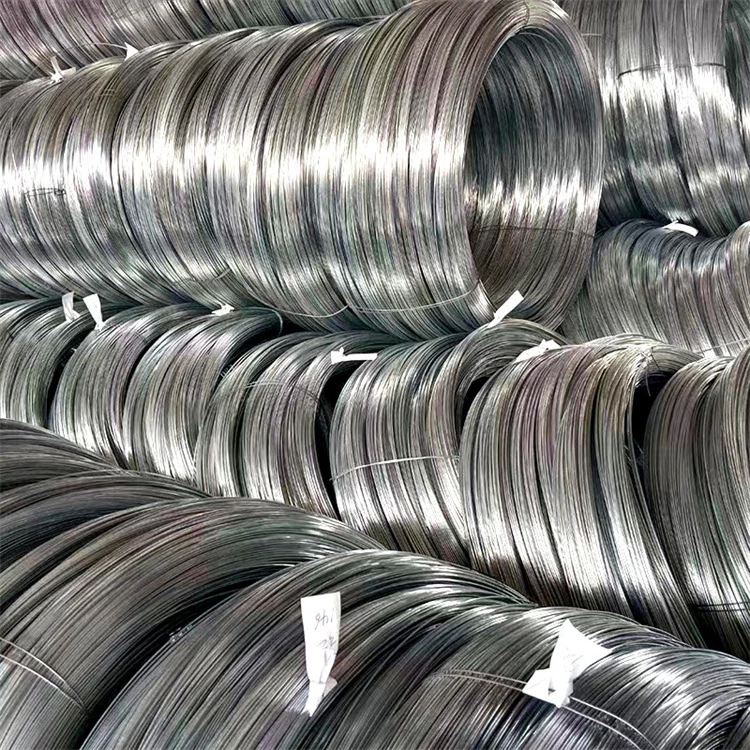
If you’re an engineer working on a new project, a procurement manager looking for a reliable titanium alloy supplier, or a hobbyist who needs a custom titanium part, I’d love to talk through your needs. Whether you need small custom parts for a prototype or large batches for mass production, we can tailor an alloy and process to fit your specs.
Cobalt Based Alloy References
- Boyer, R. R. (1996). An Overview of the Mechanical Properties of Titanium Alloys. Materials Science and Engineering: A, 213(1-2), 103-114.
- Kroll, W. J. (1940). The Production of Titanium from Its Ores. Journal of The Electrochemical Society, 78(1), 35-47.
- Lutjering, G., & Williams, J. C. (2007). Titanium. Springer.
- Donachie, M. J. (2000). Titanium: A Technical Guide (2nd ed.). ASM International.
Jiangsu Xurui Metal Group Co., Ltd.
With abundant experience, we are one of the most professional titanium alloy manufacturers and suppliers in China. We are committed to providing high quality metal products for global clients. Please feel free to wholesale bulk high-grade titanium alloy in stock here from our factory.
Address: 32-117, South Stainless Steel Market, Xinwu District, Wuxi, Jiangsu, China
E-mail: Mia@xuruimetal.com
WebSite: https://www.xurui-steel.com/
