If you’re in the market for woven fabrics, you’ve probably heard the terms “twill weave” and “broken twill” tossed around—but few people outside the textile mill floor understand the nuanced differences that set them apart. As someone who’s worked as a broken twill supplier for over a decade, I’ve fielded questions from apparel designers, home goods manufacturers, and even small-batch sewers who mix up these two weaves all the time. Today, I’m breaking down their core differences, how each is produced, and when to pick one over the other—straight from the perspective of someone who’s seen these fabrics hold up (or fall short) in real-world use. Broken Twill
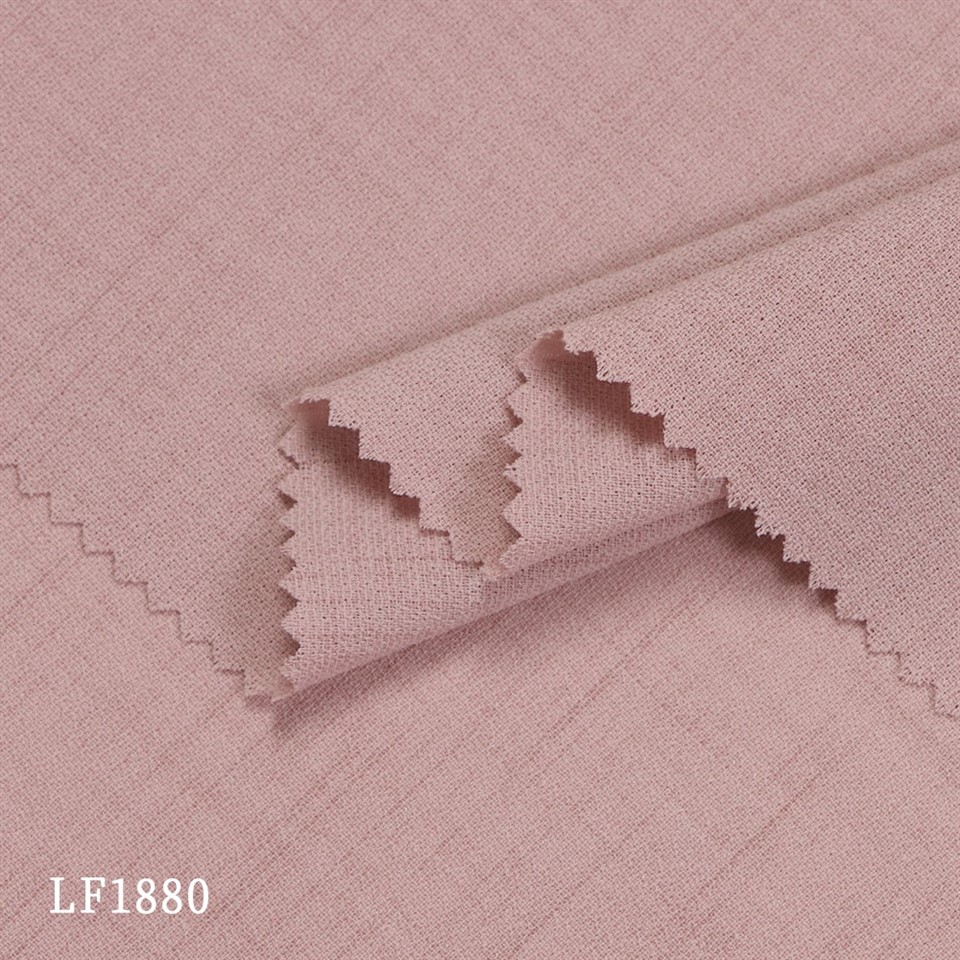
First, let’s start with the basics of twill weave in general, because broken twill isn’t a completely separate category—it’s a variation. The twill weave is one of the three fundamental weaving structures, along with plain weave and satin, and it’s defined by its diagonal rib, or “wale,” that runs across the fabric’s surface. Unlike plain weave, where every weft yarn interlaces alternately over and under warp yarns (creating a flat, crisscross pattern), twill uses a consistent offset in interlacing that creates that slanted line. For example, a standard 2/1 twill (pronounced “two over one”) means two weft yarns pass over one warp, then under one, repeating that sequence row after row. That offset is never changed—each step shifts one thread to the right, so the diagonal is smooth, uninterrupted, and consistent from selvage to selvage. You’ll find standard twill in everything from denim (it’s the 3/1 twill that gives jeans their characteristic deep diagonal) to chino pants, bedding, and even upholstery. The structure gives twill a few key perks: it’s more durable than plain weave, because fewer yarn intersections mean less friction and weaker spots, and it drapes nicely, holding a soft shape without being too stiff.
Now, that’s where broken twill comes in. The name says it all, but the how and why are what matter. Broken twill is still a twill weave, so it retains that diagonal foundation, but it interrupts the consistent offset that creates the straight wale. Instead of shifting every thread by one (or two, or three) to keep the line smooth, the weaver intentionally changes the direction of the offset at a specific number of rows. For a common broken twill, that shift happens every four rows: you weave three steps to the right to build your diagonal, then you shift one thread to the left instead of right, breaking the line so it doesn’t run all the way across the fabric. Some variations even shift multiple times, creating small, repeating V-shapes or chevrons that pop instead of a single continuous wale.
Let me make that concrete with an example, since I often use this when explaining to clients. A 2/1 twill’s wale is a straight line that might run from the bottom left corner of a fabric swatch to the top right, unbroken. A broken twill, say a 4/2 broken twill, will have that same 2 over 1 interlacing for four rows, then instead of continuing the offset to keep the diagonal going, it shifts back one thread, so the line breaks, resets, and starts again. The result isn’t just a pattern change—it’s a fabric that looks softer, less formal, and has a more dynamic surface texture.
That pattern difference leads to bigger practical distinctions, which is where my expertise as a broken twill supplier comes into play. Standard twill’s straight wale makes it incredibly easy to hide wear, right? The continuous line means any small scuffs or fading will follow the diagonal, blending in instead of standing out. That’s why denim and chinos are standard twill—they need to last through repeated washings, and the straight wale’s durability and wear resistance are unmatched. Broken twill, on the other hand, has a fractured pattern, so even small fades or snags will show up more clearly against that broken line. It’s not a fabric built for heavy-duty work, though that’s not a knock on it—it’s built for aesthetics. The broken pattern gives it a more modern, casual, or even luxurious look depending on the yarns used. I’ve sent broken twill swatches to dress shirt designers who love how the subtle, uneven diagonal adds depth without being too bold, and to home decor brands that want bedding or throw pillows that feel softer and less utilitarian than standard twill options.
Another key difference comes from the fabric’s drape and hand (that’s textile-speak for how a fabric feels to the touch and its ability to hang). Standard twill’s tight, consistent interlacing creates a structured, firm drape. A 3/1 twill used for suit lining, for example, holds its shape well without being too stiff, making it ideal for tailored garments. Broken twill’s interrupted weave has smaller, more irregular gaps between yarns in some areas, which gives it a softer, more fluid drape. I often tell clients looking for blouses, scarves, or lightweight home goods that broken twill’s hand is more flexible, less bulky, and perfect for items that need to move with the wearer instead of holding a rigid shape. That said, broken twill can be engineered for different weights too—we offer heavyweight broken twill for upholstery and lightweight for apparel, so it’s versatile, just not the same as standard twill’s consistent structure.
Yarn and thread play a role in both, of course, but broken twill has a unique relationship with yarn choice. Because the pattern relies on that intentional break, we can work with finer, more delicate yarns that would pull too tight in a standard twill’s consistent offset. I’ve created a broken twill with organic cotton yarn for a small-batch linen brand, where the soft, uneven weave added a rustic, lived-in look that standard twill couldn’t replicate. Standard twill, by contrast, is often made with sturdier, thicker yarns for workwear or upholstery, since the consistent interlacing needs to hold up to repeated stress. That’s not a rule—we’ve made heavyweight broken twill for outdoor cushions, for example—but it’s a common trend that comes from each weave’s structure.
Wait, a lot of people ask me if broken twill is just a “fancy” version of standard twill, and the answer is no—they’re optimized for different uses, which is why choosing the right one matters. Let’s say you’re making a pair of work pants that will be used for construction, where they’ll be dragged over concrete and washed dozens of times a year: standard twill is the way to go. Its straight wale hides wear, its tight weave resists tears, and it’s cheaper to produce on mass looms, which keeps costs lower for large runs. But if you’re making a set of high-end bed sheets, a summer dress, or a throw pillow that needs to stand out in a retailer’s lineup? Broken twill’s unique pattern and soft hand will add value that standard twill can’t. The interruptions in the weave make it look more handcrafted, more dynamic, and less like the twill you see in every pair of jeans on the rack.
I should also address a common misconception: a lot of people think broken twill is weaker than standard twill, and while it’s true that the irregular weave has slightly different tensile strength, it’s not inherently flimsy. When we produce broken twill, we adjust the number of interlacing points to balance pattern and durability. For example, a 5/2 broken twill (five weft over two warp, with breaks every five rows) has similar strength to a 3/1 standard twill, because the total number of yarn intersections is about the same. The key is that the strength is distributed unevenly, so it won’t hold up to the same heavy abrasion as a standard twill, but it’s more than enough for most apparel and home goods applications.
As a broken twill supplier, I’ve also seen how these weaves differ in care. Standard twill’s straight wale means it can handle hot water and harsh detergents without fading unevenly, because the consistent pattern lets color set evenly. Broken twill, with its interrupted pattern, is more prone to fading or “graying” along the break lines if washed too hot, so we always recommend cold water and gentle detergents for our broken twill fabrics. That’s a small detail, but it’s something designers and sewers need to know when specifying fabric for their products—if a customer is going to wash a garment regularly, standard twill might be a better fit, but if it’s a statement piece that’s dry cleaned, broken twill’s aesthetic is worth the extra care.
Let me wrap this up with a quick recap to make sure it’s clear, because I know textile terms can get overwhelming. The core difference between standard twill and broken twill comes down to pattern: standard twill has a continuous, uninterrupted diagonal wale created by a consistent, one-thread offset between rows. Broken twill interrupts that offset, creating a fractured, dynamic pattern that doesn’t run straight across the fabric. That difference leads to practical distinctions: standard twill is more durable, easier to care for, and ideal for heavy-duty or utilitarian items. Broken twill has a softer drape, a more unique aesthetic, and is perfect for apparel, home goods, and items where style is a priority.
If you’re a designer, manufacturer, or even a hobbyist looking to pick the right weave for your next project, ask yourself: do I need a fabric that will stand up to heavy use and hide wear, or do I want something with a unique, modern look that will make my product stand out? If it’s the latter, broken twill is the way to go. And if you’re ready to source high-quality broken twill for your line, don’t hesitate to reach out to discuss your specific needs—whether you’re looking for a specific weight, yarn type, or custom pattern, we can work with you to create a fabric that fits your vision.
Polyester Stretch Fabric References
Textile World. (2022). “Understanding Twill Weaves and Their Variations.” Textile World Magazine.
Gulledge, J. (2019). Fabric Science: Principles and Applications. Fairchild Books.
Society of Dyers and Colourists. (2020). “Weave Structure and Its Impact on Fabric Performance.” Journal of Textile Science and Engineering.
Shaoxing Huichao Textile Co., Ltd.
As one of the most professional broken twill manufacturers and suppliers in China, we offer a wide range of products with superior quality. Please feel free to wholesale bulk high-end broken twill in stock here from our factory. Good service and reasonable price are available.
Address:
E-mail: darrenzhong@huichaotextile.com
WebSite: https://www.huichao-textile.com/
