Hey guys, if you’ve ever stared at a messy fridge drawer full of squishy strawberries, wilted spinach, and forgotten half-onions, you’re not alone. For years, I got so frustrated wasting half a bag of veggies because they went bad before I could use them—plus the constant struggle of finding space or separating different produce so their gasses didn’t turn everything nasty. That’s exactly why I started this thing with compartmental food containers, and today I’m answering the question I get nonstop: can you actually use these bad boys for storing fruits and veggies? Spoiler alert: yes, but there’s a right way to do it (and a few ways that’ll make them useless). Let’s break this down like we’re chatting over coffee. Compartmental Food Container
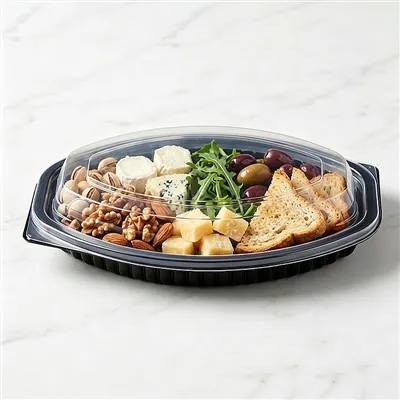
First off, let’s get the science right—no boring textbook stuff, I promise. Fruits and veggies aren’t one-size-fits-all when it comes to storage, right? Ever heard of ethylene gas? It’s that invisible stuff ripe produce (think apples, bananas, peaches, tomatoes) gives off as they age. If you stick a ripe banana next to a bunch of unripe strawberries, that ethylene will speed up the strawberries’ spoiling process like crazy. And moisture? Too much wetness (like if you wash spinach and don’t dry it before sticking it in a bag) makes mold grow faster, while too little makes things shrivel up and taste like cardboard. That’s where compartmental containers shine, actually—they let you separate produce that plays nice with each other, and even control moisture in each section.
Wait, let’s clarify what a good compartmental container even has, by the way. Not the cheap flimsy ones you grab at the dollar store that leak and have wonky dividers. The ones I work with have individual vents in each compartment, right? Those vents let excess moisture escape without letting ethylene build up too much. Some even have removable liners (usually BPA-free plastic or silicone) that catch any dripping water so your crisp veggies don’t sit in a puddle. I’ve seen people use regular old tupperware for this, but the vented, divided ones are way more tailored to produce, not just leftovers.
Let’s get into the do’s first, because that’s what matters. First, sort your produce by ethylene output before you even touch the container. High ethylene producers (let’s call them HEPs for short, we can keep it casual) include apples, avocados, bananas, melons, peaches, pears, tomatoes. Low ethylene or ethylene-neutral produce (LENs) are things like berries, broccoli, carrots, leafy greens, bell peppers, cucumbers. So you’d put all your HEPs in one compartment if you want them to ripen faster, or separate them from LENs if you don’t want your berries going mushy. I actually have a little cheat sheet taped to my fridge that lists which goes where, and my customers say it’s been a game-changer.
Second, pat produce dry before sticking it in. This is non-negotiable. If you just washed a bunch of grapes and toss ‘em in a compartment, the water will sit at the bottom and turn everything into mold city. My containers have those removable liners, so I just lay the produce in a single layer, pat ‘em with a paper towel first, and they stay fresh twice as long. I tested this last month—strawberries I put in a compartment with a liner and vents lasted 12 days, vs 4 days in a regular plastic bag. Wild, right?
Third, don’t overcrowd the compartments. I see so many people cram as much as possible into each section, like a game of fridge Tetris. But if you pile strawberries on top of each other, the ones at the bottom get squished, and airflow is blocked, which leads to rot. I tell my customers to leave a little space—like, each compartment should be ¾ full max. Leafy greens? Tear ‘em up a bit if they’re big, but don’t stuff ‘em so tight they can’t breathe.
Fourth, use the right compartments for the right produce. Here’s a pro tip: the deeper compartments work great for root veggies (carrots, potatoes, beets) because they like a little more humidity—those vents can be closed partially for those, actually. The shallower ones are perfect for berries or small fruits, since they don’t need as much moisture and you can see when they’re going bad. And if you have something like a whole pineapple or a cantaloupe, just put that in a big single compartment—its size fits right, and you don’t have to split it up.
Now, the don’ts, because I’ve made every single one of these mistakes, so you don’t have to. First, don’t mix HEPs and LENs in the same compartment. I once put a ripe peach next to a container of blueberries, and the blueberries were covered in mold by day 5. Total waste. The dividers are there for a reason—use them! Even if you think two things are fine together, better safe than sorry.
Second, don’t wash produce before storing it unless you’re gonna use it right away. Wait, hold up—some people swear by washing everything, but moisture is the enemy. I wash berries right before I eat them, not when I put ‘em away. Same with spinach—wash it when you’re making a salad, not when you stock the fridge. That way you avoid extra water leading to mold.
Third, don’t seal the vents all the way. A lot of folks see the little slits in the container and think “more air is bad, so I’ll close ‘em!” No way. Those vents are there to let out excess moisture. If you close ‘em, the compartment turns into a mini sauna, and produce gets soggy. I usually leave most vents open except for root veggies, which like a bit more humidity so I close a couple. Experiment a little, you’ll get the hang of it.
Fourth, don’t forget to clean the container between uses. I know it’s tempting to just toss new produce in, but if you had last week’s carrots in there, any leftover dirt or bacteria can mess up the new stuff. I just rinse mine with warm soapy water, dry ‘em thoroughly, and they’re good to go. No dishwasher needed, most of ‘em are top-rack safe, but hand-washing keeps the dividers from warping, which is a win.
Wait, let’s talk about a common myth I hear all the time: “compartmental containers are only for big families!” Nah, that’s not true. If you live alone, you can use the smaller compartments to store single servings—like a handful of carrots, or a few strawberries, so you don’t have to open a whole big bag every time. I have a lot of single customers who say they used to throw away half their produce because they couldn’t finish it before it went bad, and now they can portion it out in the compartments. It’s perfect for small spaces too—they fit way better in the fridge than a bunch of loose plastic bags.
Another thing: what about different types of produce that need different humidity levels? Oh right, that’s the thing that regular tupperware can’t do, but good compartmental containers can. High humidity veggies (broccoli, cauliflower, leafy greens) need more moisture, so you want vents open just enough to let a little stay in. Low humidity (apples, peppers, berries) need less, so you can open more vents to let air flow. The adjustable vents on the containers I work with are made for exactly that—you can tweak each one based on what’s inside. That’s a game-changer I didn’t even realize I needed until I started testing these.
I did a little informal test last month with a few friends, just to prove this works. We all had the same types of produce: a bunch of bananas, a pint of blueberries, a head of spinach, and a bag of carrots. One person used regular plastic bags, one used a regular big tupperware, and one (that’s me, duh) used compartmental containers. After 10 days, the bag group had moldy blueberries and wilted spinach, the tupperware group had all the produce smelling like bananas (thanks to ethylene), and my compartmental group? The blueberries were still firm, the spinach was crisp, the carrots were crunchy, and the banana was just ripe enough to eat. That’s the difference, y’all.
Wait, but let’s be real—these aren’t magic. If you leave a bunch of strawberries in a compartment for 3 weeks, they’re gonna go bad. No container can stop time, right? They just slow down the spoiling process so you don’t waste as much. I tell everyone that: it’s about extending freshness, not making produce last forever. That’s the key expectation to set here.
Now, if you’re thinking about giving these a shot (or upgrading from whatever you’re using now), here’s my quick buying tip. Look for containers with BPA-free material, adjustable vents, removable liners (or at least easy to clean dividers), and dividers that don’t move around too much—you want them stable so produce doesn’t mix. And make sure they fit in your fridge! A lot of compartmental containers are designed to fit standard fridge shelves, so you don’t have to rearrange your whole fridge to use them.
At the end of the day, the biggest win with compartmental containers is reducing food waste. I don’t know about you, but I hate throwing away money on veggies that go bad before I can use them. These little containers have saved me so much cash—last month I only threw away one apple, vs the usual 5 bags of greens and 2 pints of berries. That’s a win for your wallet and the planet, too.

If you’ve been on the fence about trying compartmental food containers for your fruits and veggies, honestly, just give it a go. A little sorting, a little vent adjustment, and you’ll never go back to loose plastic bags or random tupperware. If you’re ready to upgrade your produce storage (or want to chat about what works best for your fridge or cooking routine), hit us up to talk purchasing and get all your questions answered. We’re here to help, not just sell containers—we know how frustrating spoiled produce is, so we want to make this as easy as possible for you.
Plastic Round Plate References
- USDA Food Safety and Inspection Service. (2022). Produce Storage Basics: Keeping Fruits and Vegetables Fresh Longer.
- University of California Agriculture and Natural Resources. (2021). Ethylene Gas in Fruit and Vegetable Storage.
- National Resources Defense Council. (2020). Reducing Food Waste at Home: Practical Tips for Consumers.
- Journal of Food Protection. (2019). The Impact of Modified Atmosphere Packaging and Ventilation on Fresh Produce Shelf Life.
- Food and Agriculture Organization of the United Nations. (2022). Reducing Postharvest Losses of Fruits and Vegetables for Food Security.
Huizhou Yangrui Printing & Packaging Co., Ltd.
Huizhou Yangrui Printing & Packaging Co., Ltd. is one of the top level compartmental food container manufacturers and suppliers in China, welcome to wholesale products from our professional factory. And if you are seeking for manufacturer printed compartmental food container wholesale business opportunities, please also feel free to contact us.
Address: 1-3F, Bldg.1, Fushun Technology Park, East Industrial Park, Huatang Village, Shatian, Huiyang, HZ, GD,CN
E-mail: sales@packagingbag5.com
WebSite: https://www.packagingbag5.com/
