If you’re running a busy café, food truck, or hotel breakfast bar, a downed commercial waffle maker can kill your whole morning rush. I’ve been supplying these bad boys for over a decade, and let me tell you—most of the issues people call me about aren’t even broken parts. They’re just tiny, easy-to-miss mistakes that throw everything off. Today I’m breaking down the most common problems I see, how to fix ’em fast, and when you might actually need to call in a pro (or swap a part). Commercial Waffle Maker

First off, let’s get something straight: commercial waffle makers aren’t the same as the $50 countertop ones you grab at Target for weekend brunch. These work 12+ hours a day, 6 days a week, so they need a little respect. Skimp on cleaning, or ignore small weird noises, and you’ll end up with soggy waffles, uneven cook times, or worse—burned ones that stick to the grid like glue. Let’s start with the #1 complaint I get: waffles sticking like crazy, no matter how much spray you use.
Most folks think “stick = I need more non-stick spray” or “my plates are worn out.” Nah, 9 times out of 10, it’s a cleaning thing, or a tiny temperature misread. Here’s the thing: if you leave old batter crumbs on the grids, those burn on over time, turning into little hard black bits that act like sandpaper. Next time you pull out a stuck waffle, take a close look at the edges—see any tiny brown gunk flaking off? That’s old batter. It builds up even after you wipe the machine down, especially if you’re not doing a deep clean at the end of every day. The fix for that is way simpler than replacing plates: unplug the machine while it’s still warm (not hot enough to burn you), take a soft bristle brush (I don’t recommend steel wool—scratch the non-stick coating, and we hate that), and gently scrub the grids, then wipe with a damp rag. If the gunk’s extra stubborn, a tiny bit of white vinegar on the rag works, just make sure you dry the plates completely before turning the machine back on—water spots will mess with the heat later.
Wait, another big reason for sticking? Temperature. Commercial waffle makers are designed to hit a specific temp (usually 350-375°F for most standard waffles) to set the batter fast before it can seep into the grids. If the thermostat’s off by even 10 or 15 degrees, the batter doesn’t set right, and it sticks. How do you check that? Grab an oven thermometer, set it on the grid, close the lid, and let it heat up for 10 minutes. If it’s reading lower than it should, your thermostat might be calibrated wrong. A lot of newer machines have a tiny calibration screw inside the control panel that you can adjust (just make sure you check your manual first—don’t mess with it if you’re not sure). Old machines? Maybe the heating element’s wearing out, which I’ll get to later.
Next problem: waffles are half raw, half burned, like you cooked half on the hot side and half on the cool. Uneven cooking is so frustrating, especially when you’re cranking out 20 waffles for a brunch rush. Again, start with cleaning. If one side of the grid has way more gunk, or is coated with old grease, it’ll heat unevenly. But another super common culprit is the lid not closing all the way. If your hinge is loose, or you’re not pressing down hard enough, the top grid sits half an inch above the batter instead of making full contact. I see this all the time with machines that get moved around, like if you hauled it to a catering event and didn’t tighten the hinge bolts when you got back. Pop off the hinge cover (most of them just snap off) and tighten the bolts with a standard wrench—don’t overdo it, or you’ll crack the hinge. If the hinge is wobbly even after tightening, let me know, we sell replacement hinges super cheap, and they take 2 minutes to swap out.
Another wild card for uneven cooking: the machine sitting level. If your food truck’s counter is tilted, or your café’s griddle area has a weird dip, the batter will run to the low side, so that grid overheats while the other stays cool. I once had a food truck owner tell me his waffles were half raw, and it turned out he parked his truck on a slightly sloped street every morning. A $10 bubble level fixed everything. Quick tip: check that, it takes 10 seconds, and saves you from burning a batch of waffles for a line of waiting customers.
Third common issue: the machine won’t heat up at all, or it takes 20 minutes longer to get to temp than it used to. This is the big one that makes people panic. First, rule out the obvious: is it plugged in? Sounds dumb, but I’ve had a barista call me crying because they flipped the wrong circuit breaker that powers the back kitchen. Check that first. Then, if it’s plugged in and the light won’t even turn on, it’s probably a loose power cord or a blown fuse. The power cord on commercial machines takes a beating—twisted when you move it, pulled when you yank the machine around, so the connection at the back gets loose. Unplug it, wiggle the cord where it connects to the back of the machine, and if the light flickers, you just need to tighten the terminal screws (again, inside the control panel—easy to get to, just take off the little cover). If the light is on but it’s not heating, or it’s heating super slowly, that’s usually the heating element going bad. Heating elements last 2-5 years depending on use, so if yours is older than that, that’s probably it. Don’t try to fix the heating element yourself—they get red hot, and messing with the wiring can be dangerous. Just call your supplier (wink wink) and we can send you a replacement, plus a step-by-step video to swap it in 10 minutes.
Wait, I’ve also had people say their waffle maker keeps turning off mid-batch, like it trips itself. That’s often the thermal fuse kicking in as a safety thing. If the machine is overheating because it’s been cranking all day and you never let it cool down, or the vents on the side are blocked with crumbs or grease, the thermal fuse will shut it off to prevent a fire. All commercial waffle makers have those vents on the sides or back—make sure you’re vacuuming or wiping them down every day. Don’t stack anything on top of the machine, that blocks airflow too. I had a hotel client once stack a stack of plates on his waffle maker for 2 weeks, and the fuse blew twice before he fixed it. Oops.
Now, let’s talk about when you should actually panic (or just reach out to someone who knows these machines). If you’re hearing weird buzzing or grinding noises that weren’t there before, that’s not normal. 9 times out of 10, that’s a loose heating element or a failing motor (for rotary waffle makers, which spin to evenly cook batter). Don’t keep running it—you’ll blow more parts, and it’ll cost way more to fix than if you swap the part early. Another red flag: if the machine is sparking, or smelling like burnt wiring. Unplug it immediately, that’s a fire hazard, and get it checked. And if you’ve tried all the fixes I listed here, and the problem is still there after a week, it’s probably a deeper issue—like a bad thermostat or control board, and those are not DIY fixes.
A quick pro tip from the veteran supplier desk, for free (you’re welcome): keep a tiny parts kit on hand if you use your waffle maker every day. We sell kits with extra fuses, a replacement power cord, and a hinge screw set for like $20. It’s way cheaper than paying for a service call when your machine dies at 7am on a Saturday. Also, keep a cleaning schedule—don’t just wipe the tops of the grids after each batch. At the end of every day, unplug the machine, let it cool for 30 minutes, and wipe the whole thing down: the grids, the front control panel, the vents, even the side legs where crumbs pile up. A dirty machine is a broken machine, I swear.
Let me test if I missed anything—sticking, uneven cooking, won’t heat, tripping out mid-batch, weird noises. Yeah, that covers 90% of the calls I get. The worst part is when people wait 2 days to fix a tiny problem that turns into a $500 repair because they ignored it. I had a small café owner last month who noticed his waffles were sticking a little, so he just stopped making waffles for a week instead of calling. By the time he called, his non-stick coating was scratched, the thermostat was off, and he had to replace two parts plus pay for service. If he’d called when he first noticed the sticking, I would’ve told him to clean the grids and it was $0 fix.
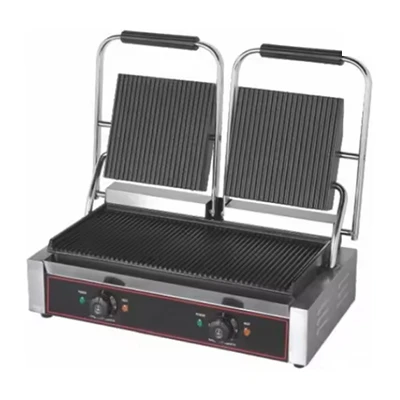
If you’re dealing with any of these issues, don’t stress. Most of the time it’s super easy to fix, no fancy tools or special training needed. But if you’ve tried all the steps, or you’re not comfortable digging around inside the machine, just reach out to us. We don’t do long wait times, and we’ll get you back to cranking out waffles fast, no downtime needed. Whether you need a replacement part, a quick troubleshooting walkthrough over the phone, or a new machine if yours is on its last legs, we’ve got you covered. Now go fix that waffle maker and get back to serving your customers.
Drinks Machine References
- National Restaurant Association. (2022). Commercial Kitchen Equipment Maintenance Best Practices.
- Food and Drug Administration. (2021). Cleaning and Sanitizing Food Service Equipment for Commercial Operations.
- Waffle Makers Association. (2023). Troubleshooting Guide for Countertop Commercial Waffle Irons.
Hangzhou Joy Kitchen Equipment Co., Ltd.
As one of the most professional commercial waffle maker manufacturers and suppliers in China, we also support custom service. We warmly welcome you to wholesale advanced commercial waffle maker from our factory. If you have any enquiry about cooperation, please feel free to email us.
Address: Building1, Tongrenessence Building, Xihu District, Hangzhou, Zhejiang Province, China
E-mail: tyler@equipmentjoy.com
WebSite: https://www.joykitchenequipment.com/
